Frequently Asked Questions About Ingrown Toenails
What is an ingrown toenail?
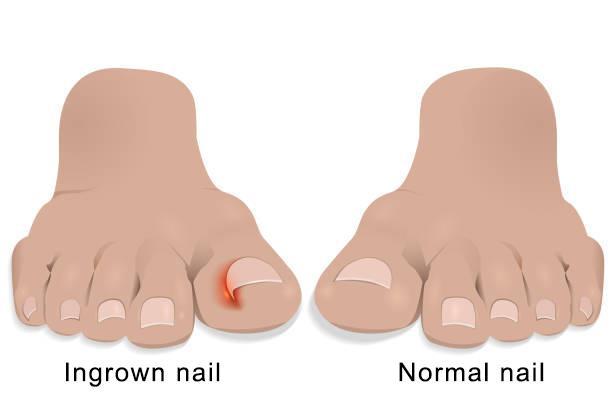
An ingrown toenail is a condition where the corners of one or both sides of the toenail curls downward and grows into the soft flesh of the toe. This causes swelling, redness, and pain.
What are the common symptoms of an ingrown toenail?
Common symptoms of an ingrown toenail include:
-
- Pain near the edge of the toenail
-
- Redness
-
- Tenderness to the touch
-
- Swelling
-
- Drainage at the site of the ingrown toenail
What can be done to treat an ingrown toenail?
Treatment for an ingrown toenail usually involves one or a combination of the following:
-
- Soaking the foot in warm water and salt multiple times a day
-
- Use of antibiotics to prevent infection
-
- Taking pain medication to relieve discomfort
-
- Surgical removal of the ingrown toenail
Are there any preventive measures to prevent a recurrence of an ingrown toenail?
Preventive measures for an ingrown toenail include:
-
- Trimming the toenails straight across
-
- Wearing shoes that fit properly
-
- Avoiding shoes that are too tight or small
-
- Avoiding activities that could be traumatizing to the toenails
It is important to properly treat and prevent ingrown toenails in order to avoid any other infections or complications. If you are experiencing symptoms of an ingrown toenail, it is recommended to see a podiatrist or other healthcare provider for proper evaluation and treatment. Recently, the public has become increasingly aware of an unpleasant, but very common condition known as an ingrown toenail. Generally caused by improper nail trimming, irritation from socks/shoes or from constant pressure from an activity (such as running or soccer), an ingrown toenail can cause a great amount of pain and discomfort.
Here are a few commonly asked questions about ingrown toenails:
1. What is an ingrown toenail?
An ingrown toenail occurs when the corner or side of the toenail grows into the skin of the toe. It typically affects the big toes, but can occur in any of the toes. Ingrown toenails are often accompanied by redness, swelling, and pain around the affected area.
2. How do you treat an ingrown toenail?
If the ingrown toenail is mild, one can attempt to take care of it at home by soaking the affected toe in warm water and Epsom salts. Once the swelling has reduced, one can gently lift the edge of the nail and insert a cotton ball or dental floss underneath. Applying an antibiotic ointment and a bandage can help to reduce further infection.
If the condition is severe, or if there is a risk of infection, one should see a doctor. Doctors can typically treat an ingrown toenail by removing part or all of the nail and/or using a special orthotic.
3. How can I prevent ingrown toenails?
To prevent ingrown toenails, the following tips should be followed:
• Trim your toenails straight across rather than rounded and avoid cutting the nails too short.
• Wear shoes that are the correct size and provide adequate space for your toes.
• Avoid activities that involve constant pressure on the toes, such as running or soccer.
• Wear socks that fit properly and that are of a material that won’t cause irritation to your feet.
• Keep your feet dry and free of moisture, as wet feet can cause the nails to soften and become easier to puncture.
If you follow these suggestions, your likelihood of developing an ingrown toenail will decrease significantly.
Ultimately, if you notice that you are suffering from an ingrown toenail, it is best to seek medical treatment by a doctor. An early diagnosis and treatment are best to reduce the risk of infection, pain and discomfort.